
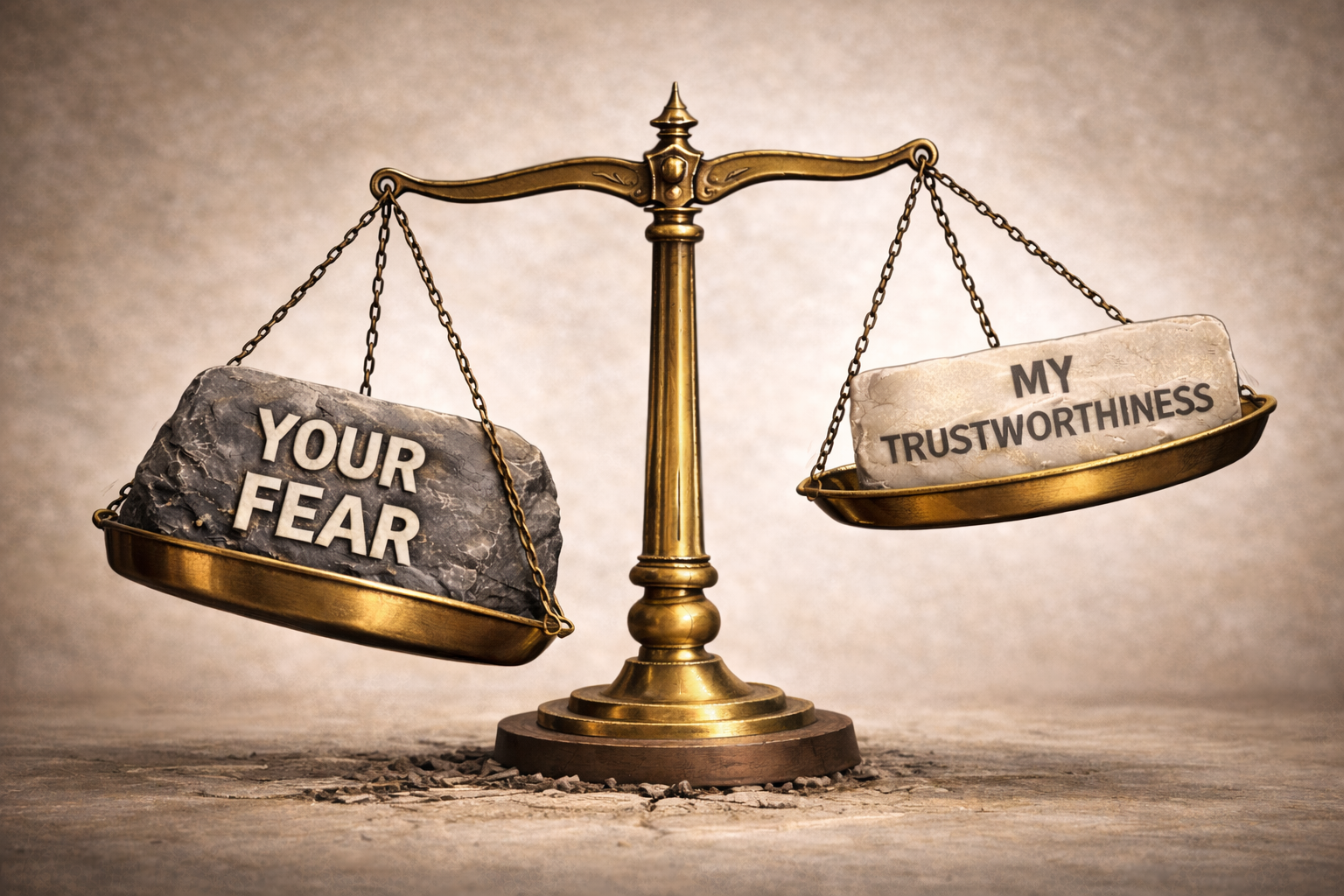
We are often told that trust is earned. We are taught that if we show up, tell the truth, and remain consistent, the people we love will feel safe with us. But what happens when you do all of that and it still isn’t enough?
Being on the receiving end of trust issues in relationships is one of the most disorienting experiences a person can face. You provide the evidence, you offer the transparency, and yet, you are met with a guardedness that never quite relaxes.
The Weight of Being Distrusted Without Cause
When you have done nothing to deserve suspicion, being distrusted feels like a heavy, invisible weight. It isn’t always a loud accusation or an angry confrontation. Often, trust issues in relationships manifest in quieter, more damaging ways:
- A slight hesitation when you say where you’ve been.
- The constant need to over-explain simple situations.
- A partner who stays emotionally distant to “protect” themselves from a betrayal that isn’t happening.
At first, your instinct is to try harder. You clarify, you reassure, and you provide even more proof. But eventually, a lingering question begins to surface: Is trust something I can actually earn, or was the verdict decided before I even arrived?
Why Fear Overpowers Reality
To understand trust issues in relationships, we must understand that fear is incredibly persuasive. Fear doesn’t care about your current track record; it only cares about past memories. It feeds on old wounds, past betrayals, and former heartbreaks.
When someone struggles with deep-seated insecurity, they stop asking, “Who is this person in front of me?” and start asking, “What happened to me last time?”
Wisdom is meant to respond to reality, but fear responds only to history. This is where the injustice begins. When we allow our past trauma to dictate our current view of a trustworthy partner, we aren’t being discerning—we are being unfair.
Internal Link Idea: If you’re struggling with communication alongside trust, check out our guide onhow to improve communication in your life(replace this with your actual post link).
The Hidden Cost of Constant Distrust
Stephen Covey, a master of organizational trust, famously said: “When trust goes down, speed goes down, and cost goes up.” While he was often referring to business, this is devastatingly true for personal connections.
When trust issues in relationships take root, the “cost” is your peace of mind and the “speed” is the growth of your intimacy.
- It Erodes Psychological Safety: You no longer feel free to be yourself because you are too busy managing their potential triggers.
- It Hollows Out Intimacy: True connection requires vulnerability. But if one person is always “protecting” and the other is always “proving,” there is no room for real closeness.
- It Creates a Trial, Not a Team: Over time, the relationship stops feeling like a partnership and starts feeling like a courtroom.
A Moment of Honesty: Are You the “Untruster”?
Up to this point, it’s easy to read this and feel like the misunderstood hero—the one who is doing everything right while being unfairly judged. But we must also look in the mirror.
Many of us have been the “untruster.” Brené Brown reminds us that “Vulnerability sounds like truth and feels like courage.” Choosing to trust someone who has proven themselves trustworthy is an act of immense courage. It requires you to put down your “wasted armor” and accept that while being hurt is a possibility, living in isolation is a certainty if you never let your guard down.
5 Practical Ways to Heal Trust Issues in Relationships
If you find yourself struggling to trust despite a partner’s solid track record, it is time to recalibrate.
- Acknowledge the Source: Is your doubt coming from their actions or your own past?
- Focus on Patterns: Trust isn’t built on single moments; it’s built on patterns. If their pattern is honesty, believe it.
- Communicate the Fear: Instead of acting on the suspicion, name the fear.
- Seek Professional Help: Sometimes deep wounds need more than just effort to heal.
- Practice Self-Compassion: Be kind to yourself as you unlearn old defense mechanisms.
Final Thoughts: Don’t Be That Guy
Distrusting a trustworthy person doesn’t keep you safe; it just keeps you small. It starves a good relationship of the oxygen it needs to survive.
Not everyone deserves your trust—that is wisdom. But when someone has consistently shown you who they are, believe them. Don’t let fear win. Be better. Be the person who has the courage to see reality for what it is, not what you fear it might become. to see reality for what it is, not what you fear it might become.

Deep.
and wide? : )
Aaawww Derrick…thank you again for showing your vulnerability!
I love the way you write!
From the deepest part of your soul.
Trust needs to be earned…sometimes…and…trust should be freely given at other times. Gut instincts are sometimes Holy Spirit.
Prayers are answered 🙏 ❤️
Pray for each new step in your life…it doesn’t belong to man who is walking to direct his own steps
Love, D.Rose
You are the best. Thank you : )
So many powerful statements here: fear of trusting didn’t keep me safe, it kept me small; wasted armor… the cautious skeptic who may be overprotecting…. so poignant and relatable. The best part about this for all of us, is once the light is turned on for us, we can’t unsee it. And that’s always the first step for each of us in, as you say, “being better”. Thank you for being an inspiration~
Thank you, friend. I appreciate your words and hope I can keep getting better. You rock!
Hard lessons to learn. Give it over God and trust Him.
Thanks homie. Always get better.
sup?
Trust Wastefully
I need to learn that 🙂
Excerpt from a book on childhood trauma, and your trust issue… ; Being harmed as a child, experiencing trauma (not from your family, but bleeding in brain/coma/paralyzed) The most traumatic aspect, is shattered human connections. (For you, the loss of being the popular athlete) Robbed of the ‘athletic relationships with team mates, and suddenly feelings of vulnerability had profound destructive effects on your brain functions. ( Not sure how a metal plate in your head helps or hurts functioning)!
You had to, as all traumatized children have to…rebuild trust, regain confidence, return to sense of security, before you could love/ trust others. A healthy community to buffer your pain/dustress/loss caused by the trauma, is what works best to heal. The number of relationships is another factor ( hence …what you do for a living! ) Consistent, loving care, in repeated daily interactions is exactly what heals the traumatized brain. 321 show is a beautiful and positive support for those adults, who were traumatized children. This healing process is long…never give up. When Julie spoke truth yesterday, saying “EVERYBODY LOVES US”, we saw your response. It’s okay that she was honest and spoke that truth. Everybody that gets to know you and participates on your 321 show, does love you. Love is a Commandment. Love is a good thing. Anyway…you know you are loved…you just have to ❤️ love the fact that you are loved! Like Julie does.
Wow! Thanks for your perspective D. Pretty heavy 🙂
ps. I don’t really have a metal plate in my head, that’s just a joke I wrote🤪